In 2024, Cameroon topped the list of displacement crises that were most overlooked. This underscores the persistent gaps in funding, media visibility, and international political and diplomatic engagement. Since 2016, Cameroon has faced escalating violence between the central government and non-state armed groups in the Southwest and Northwest regions. The ongoing conflict and attacks on border communities have led to significant internal displacement throughout the country.
The situation in the West region is estimated to be particularly severe with urgent needs in shelter, food, water and sanitation, as well as protection. However, population estimates and socioeconomic data on IDPs remain fragmented, often unverifiable, and limited in coverage.
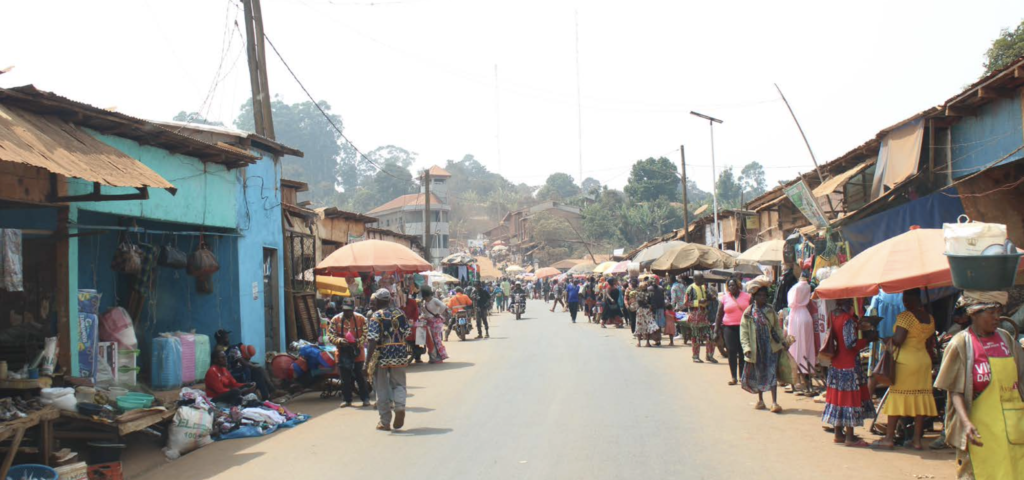
In this context, a profiling exercise was implemented between 2023-2025 across five municipalities in the West region, as part of the multiyear project Promoting the Economic and Social Participation of Internally Displaced Persons and Host Communities (PESoP): Dschang (Menoua), Bafoussam 1er (Mifi), Foumban and Kouoptamo (Noun), and Mbouda (Bamboutos). These five municipalities together host an estimated 34% of the West’s 114,111 IDPs (OCHA, 2023).
Importantly, the profiling exercise allowed to identify the specific vulnerabilities faced by displaced persons and the obstacles they encountered in integrating locally in the different municipalities. It also highlighted the challenges faced by both displaced persons and non-displaced residents, indicating broader development needs rather than displacement-specific issues.
The profiling exercise was shaped in a highly consultative and collaborative way, with the support and participation of municipal authorities, sectoral ministries (MINDDEVEL, MINEPROFF, MINEFOP, MINPMEESA, MINJEC, MINJUSTICE, MINSANTE, MINMIDT, MINADER, MINAT), technical government entities (INS, BUCREP, BUNEC) as well as community representatives. All these stakeholders formed the Extended Piloting Committee which functioned as the key coordination structure for the profiling. The profiling was implemented by UNHCR, GIZ, BUCREP and INS, with technical support from JIPS.
Generally, the socioeconomic situation of IDPs was found to be similar to that of the non-displaced persons, indicating that local integration was progressing. The study pointed to the need for improvement in the following specific areas:
Youth unemployment and inactivity surfaced as a major concern for both population groups, thus calling for inclusive development investments. Finally, the profiling also pointed to positive achievements and progress on local integration, with similar conditions for IDPs and non-displaced persons, namely:
As per the IASC Framework on Durable Solutions for IDPs, ‘a durable solution is achieved when IDPs no longer have specific assistance and protection needs that are linked to their displacement and such persons can enjoy their human rights without discrimination resulting from their displacement’. Achieving durable solution – whether in the form of local integration, resettlement, or return – is a process towards overcoming vulnerabilities linked to displacement and encompasses several criteria, including safety and security, access to basic services and livelihoods.
The studies thus provide concrete pointers for policymaking and local responses in support of short-term vulnerabilities but also longer-term development needs. With the great majority of IDP households expected to remain in the municipalities, local authorities and actors recognised the need to support both the local integration of IDPs and the social cohesion across diverse communities.
Learn more through the five municipality-level solutions analysis reports, from the consolidated insights on socioeconomic inclusion of IDPs in the research brief, or by digging deeper into the anonymised dataset (links see below). All publications are available in French and English.
—–
JIPS’ support in Cameroon was made possible through the generous co-funding and multi-donor partnership with the European Commission’s Directorate-General for European Civil Protection and Humanitarian Aid Operations (ECHO), the Danish International Development Agency (DANIDA), the German Agency for International Cooperation (GIZ), and USAID’s Bureau for Humanitarian Assistance (BHA, up to Jan 2025).